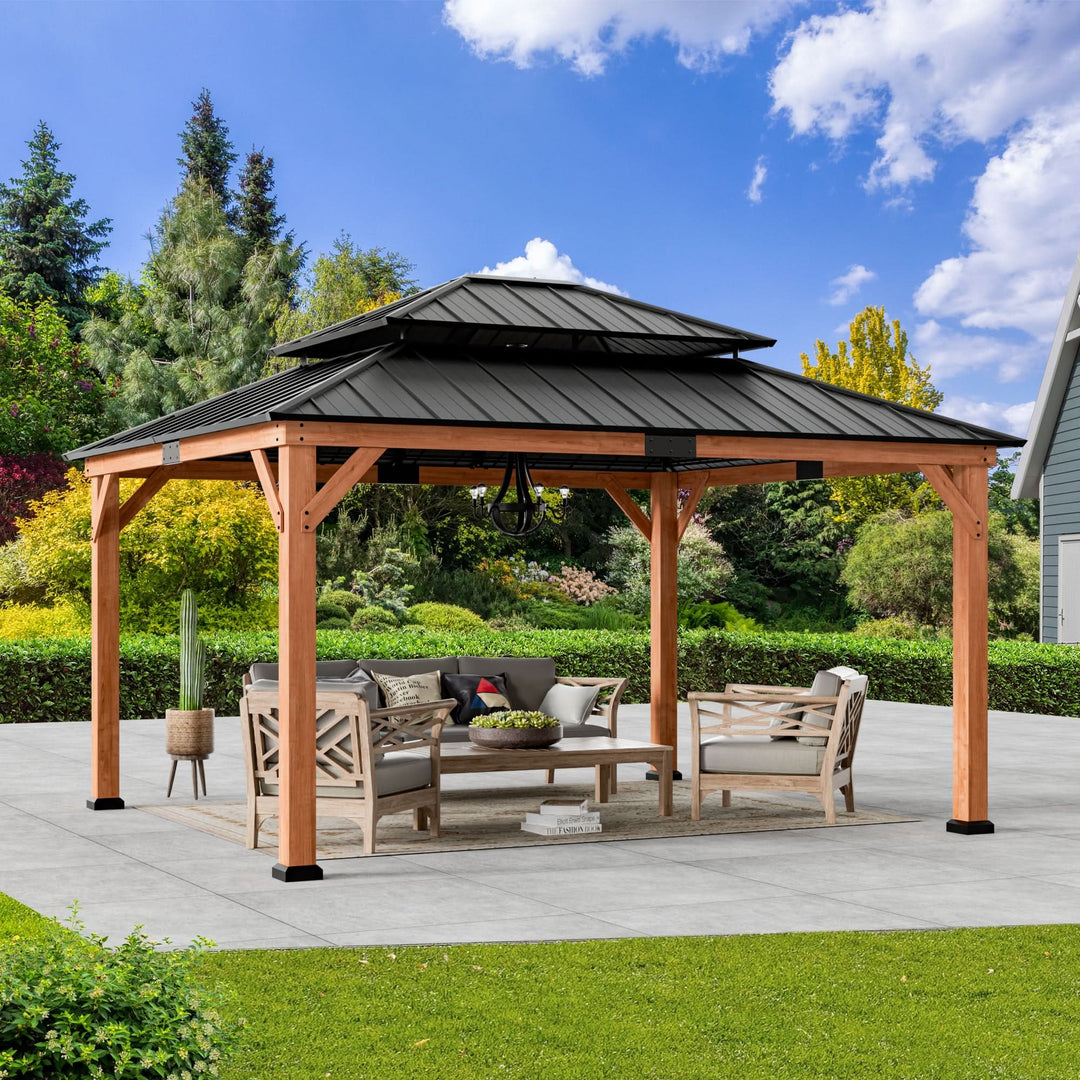
Can You Put a Fire Pit Under a Gazebo? Safety Rules, Roof Designs, and Expert Tips
Creating the ultimate outdoor living space requires a balance of warmth, comfort, and safety. If you are shopping for a new backyard structure, you might wonder: can you put a fire pit under a gazebo?
The short answer is: Yes, you can put a fire pit under a gazebo, but it requires specific safety precautions to prevent fire hazards and poor ventilation.
Homeowners on Reddit and Facebook forums frequently share real-world frustrations regarding this exact setup. Common pain points include soot staining wooden ceilings, trapped smoke irritating eyes, and concerns over melting mosquito netting.
To help you design a safe and beautiful outdoor oasis, this comprehensive guide covers everything from fuel types to roof clearance.

Why Does Fuel Type Matter Under a Covered Roof?
The type of fuel your fire pit burns dictates its safety level under a ceiling. Wood-burning fire pits create unpredictable hazards. They release flying embers, sparks, and dense smoke. These elements trap easily under a roof, causing respiratory discomfort and creating a severe fire hazard.
For safety under an outdoor structure, choose propane, natural gas, or bioethanol fire pits. Gas fire pits produce controllable flames, zero sparks, and minimal emissions. This choice eliminates the risk of stray sparks igniting your structure. If you are also considering cooking options for your space, you can read our guide on can you grill under a gazebo to understand different ventilation needs.
How Much Overhead Clearance Do You Need for a Fire Pit?
Vertical clearance prevents heat buildup from damaging your structure. Most fire pit manufacturers mandate a minimum clearance of 6 to 10 feet between the top of the flame and any overhead combustible materials.
Standard soft-top fabric gazebos degrade quickly under intense heat. For maximum safety and durability, a hardtop gazebo built with an aluminum or steel roof provides superior heat resistance. Even with a metal roof, maintaining a high ceiling height ensures that rising heat dissipates before it distorts or discolors the metal.
What Are the Ventilation Requirements for Gazebo Fire Pits?
Enclosed spaces accumulate toxic gases quickly. Fire pits consume oxygen and release carbon monoxide. Never operate a fire pit inside a fully enclosed gazebo with all side privacy panels zipped shut.
To guarantee safe airflow:
-
Keep at least three sides of the structure completely open.
-
Remove fabric mesh or netting near the heat source to prevent melting.
-
Select a gazebo model that features a vented, double-tier roof design to allow rising heat and ambient fumes to escape efficiently.
Does a Gazebo Need a Foundation to Support a Fire Pit?
Weight and heat stability demand a solid ground surface. Fire pits, especially heavy concrete or stone gas models, require a flat, non-flammable base. Placing a fire pit directly onto a wooden deck or plastic turf under a gazebo creates a direct fire risk.
Before assembling your outdoor living area, ensure your structure sits on a concrete pad, pavers, or flagstone. If you are preparing your backyard layout, learn more about proper structural anchoring in our article: does a gazebo need a foundation.

Which Gazebo Roof Designs Work Best for Fire Pits?
Forum users in carpentry and home improvement communities often debate the best roof designs for handling heat. If you plan to incorporate a fire feature, the architectural design of your gazebo roof is critical.
-
Double-Tiered Vented Roofs: This design features a secondary small cap roof over a central vent. It creates a natural chimney effect, pulling warm air and air currents upward and out.
-
Sloped Slatted Roofs / Louvered Pergolide Designs: Adjustable louvers allow you to open the roof completely when the fire pit operates, maximizing ventilation.
-
High-Pitch Gabled Roofs: A steep roof pitch increases the total vertical volume, keeping the hot air further away from the structural beams.
How Do Fire Pit Rules Differ for Pergolas, Covered Patios, and Canopies?
When evaluating open-air fire safety, homeowners often consider structures beyond a traditional hardtop gazebo—including pergolas, covered patios, house roof overhangs, and tree canopies. Because each structure differs in ceiling materials, airflow, and proximity to surrounding walls, safety boundaries vary significantly:
1. Pergolas (Open-Lattice vs. Louvered Roofs)
Traditional wood or metal pergolas feature an open-slatted roof, often paired with climbing vines.
-
Safety Rules: While an open-slatted or louvered pergola allows smoke and heat to escape more freely than a solid ceiling, flying embers from wood fires can easily ignite overhead timber beams or dry foliage.
-
Compliance: Never place a wood-burning fire pit under a pergola. Only use low-flame propane or natural gas fire tables, keeping at least 8 to 10 feet of vertical clearance and opening motorized louvers completely during use.
2. Covered Patios and House Roof Overhangs
Covered patios are structural extensions attached directly to your home, typically featuring drywall or wood ceilings and adjacent exterior walls.
-
Safety Rules: Exterior vinyl siding warps, melts, or ignites rapidly when exposed to radiant heat. Additionally, trapped carbon monoxide can enter nearby windows or doors.
-
Compliance: Never place any fire pit directly under a low house overhang or inside a three-walled covered patio. Position the outer edge of the fire pit at least 10 to 15 feet away from house walls, railings, and eaves.
3. Tree Canopies and Pop-Up Canopies
Natural tree canopies and temporary fabric pop-up tents pose severe overhead ignition risks.
-
Safety Rules: Even without direct flames, invisible rising heat dries out overhanging branches, palm fronds, and leaves, creating an immediate canopy fire hazard. Similarly, polyester pop-up canopies can melt or catch fire within seconds.
-
Compliance: Ensure the vertical space directly above your fire pit is completely clear of overhanging branches, leaves, and fabric awnings.
|
Structure Type |
Roof Material & Features |
Propane / Gas Fire Pit |
Wood-Burning Fire Pit |
Core Risks & Compliance Notes |
|
Metal Hardtop Gazebo |
Galvanized steel or aluminum, double-tiered vents |
Allowed (with 6–10 ft clearance) |
Strictly Prohibited |
Monitor heat buildup under metal panels; keep side netting retracted. |
|
Soft-Top Fabric Gazebo |
Polyester canopy, plastic joints |
Not Recommended |
Strictly Prohibited |
High risk of fabric melting, warping, or igniting from rising heat. |
|
Louvered Pergola |
Adjustable aluminum or wood louvers |
Allowed (when louvers are open) |
Not Recommended |
Sparks can ignite wooden beams or climbing plants; keep 8–10 ft clearance. |
|
Covered Patio / Overhang |
Attached house roof, drywall/wood soffit |
Restricted (small fire tables only) |
Strictly Prohibited |
Vinyl siding melts easily; must stay 10–15 ft away from home walls. |
|
Tree Canopy |
Natural branches, leaves, vines |
Strictly Prohibited |
Strictly Prohibited |
Rising heat dries out overhead foliage and triggers uncontrolled fires. |
How Do You Maintain Your Outdoor Setup Year-Round?
A permanent backyard setup must withstand seasonal changes. While you enjoy your fire pit during chilly autumn nights, winter requires different preparation. Heavy snow loads can stress structures, and freezing temperatures can affect gas lines. To ensure your investment survives the off-season, review our expert care instructions on can you leave gazebo out in winter.
Checklist for Safely Operating a Fire Pit Under a Gazebo
Before you ignite your first flame, verify that your outdoor setup satisfies these core safety standards:
|
Safety Factor |
Requirement for Gazebo Use |
|
Fuel Source |
Propane, Natural Gas, or Bioethanol only (No Wood) |
|
Vertical Clearance |
Minimum 6 to 10 feet from flame to ceiling |
|
Airflow |
Open-air configuration (Sides open, mesh retracted) |
|
Floor Material |
Non-combustible surface (Concrete, pavers, or fire mat) |
|
Roof Material |
Fire-resistant metal or hardtop composite |
By selecting a premium, heavy-duty structure and pairing it with a clean-burning gas fire pit, you can build a cozy, functional outdoor entertainment hub that keeps your family warm and safe for years to come.