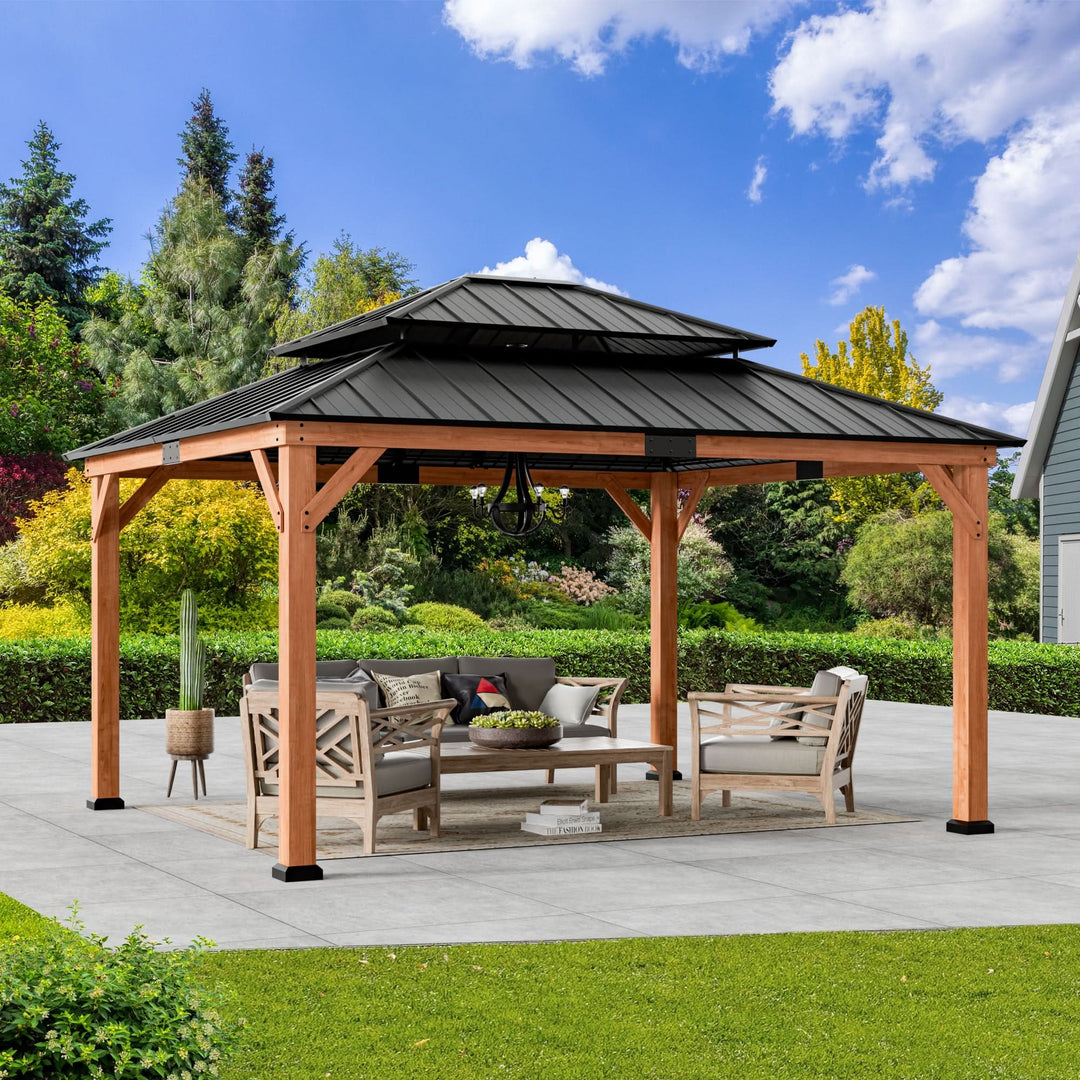
How to Organize Your Gazebo
Organizing a gazebo involves defining its core purpose, managing floor space, and adding smart storage to keep the area clutter-free.
When you first purchase a backyard structure, the open space can quickly become a catch-all for garden tools, outdoor toys, and weather cushions. Without a clear plan, homeowners frequently struggle with cramped layouts, blocked walking paths, and furniture that overwhelms the footprint.
This guide provides an end-to-end strategy on how to organize a gazebo, addressing real-world spatial challenges and maximizing usability for new owners.

What is the Primary Purpose of Your Gazebo?
Before buying furniture or hanging decor, establish a single main job for your structure. Splitting a compact footprint among too many functions creates a cluttered, unusable area.
-
Choose a single main job: Decide whether the gazebo will serve as an outdoor dining room, a quiet reading nook, or a conversational lounge before arranging any pieces.
-
Zone mixed spaces: For larger footprints (such as 10x10 ft to 12x16 ft), split the area into distinct micro-zones, like a compact dining table on one side and a slim-profile sectional or loveseat on the other.
-
Map out movement: Leave a clear walking path from the house door to the structure and ensure chairs can pull out safely without hitting posts or railings.
If you are still evaluating structural sizes and styles for your yard, exploring a curated collection of modern gazebo options helps match dimensions to your intended layout.
How Do You Select and Layout Furniture?
Poor furniture scaling is the number one reason outdoor structures feel cramped. Selecting weather-resistant pieces with built-in utility preserves your open floor space.
-
Scale to fit: Use multi-functional, weather-resistant furniture like storage benches, slim sectionals, or nesting coffee tables to avoid overcrowding.
-
Anchor with a rug: Place an outdoor-rated area rug in the center to ground the primary seating or dining group and define the space boundaries.
-
Plan clearances carefully: Keep at least 24 to 36 inches of clearance around seating groups so traffic flows naturally through the shelter.
For more layout inspiration and visual concepts tailored to different yard sizes, review these helpful backyard gazebo ideas to see how other owners configure their outdoor rooms.
How Can You Control Clutter and Add Storage?
Keeping loose items organized prevents your outdoor living area from looking messy. Utilize vertical space and dual-purpose seating to keep gear out of sight.
-
Use storage benches and ottomans: Hide extra throw pillows, blankets, kids' toys, or small garden tools inside lidded seating.
-
Add wall-mounted hooks and racks: Hang gardening tools, hats, or extension cords along the interior posts or perimeter lattice.
-
Protect seasonal gear: Keep cushions clean in waterproof deck boxes or store sidewalls and canvas covers rolled up (never folded) in a dry space during winter months.
If your structure sits lower to the ground or feels restricted by low eaves, learning how to properly raise the height of a gazebo can provide critical vertical clearance for taller storage cabinets or ceiling-mounted hardware.

How Do You Layer Lighting, Ambiance, and Comfort?
Completing your organization layout requires addressing lighting, temperature control, and perimeter aesthetics to make the space comfortable day and night.
-
Layer your lighting: Combine overhead string lights or a pendant fixture with solar-powered lanterns or battery-operated table lamps. If you plan to hardwire permanent overhead fixtures, check out the steps to install a ceiling fan in a gazebo for enhanced airflow during hot summer afternoons.
-
Add bug protection: Install zip-up mosquito netting or drop-down screened panels to make the space usable during evening hours without pest interruptions.
-
Incorporate perimeter green: Place potted ferns, hanging baskets, or climbing vines (like jasmine) around the edges to soften hard architectural lines without eating up floor space.